Payment Pathways Fueling Tiered Elevations in Live Table and Reel Ecosystems
Jordan Butler · Jul 7, 2026
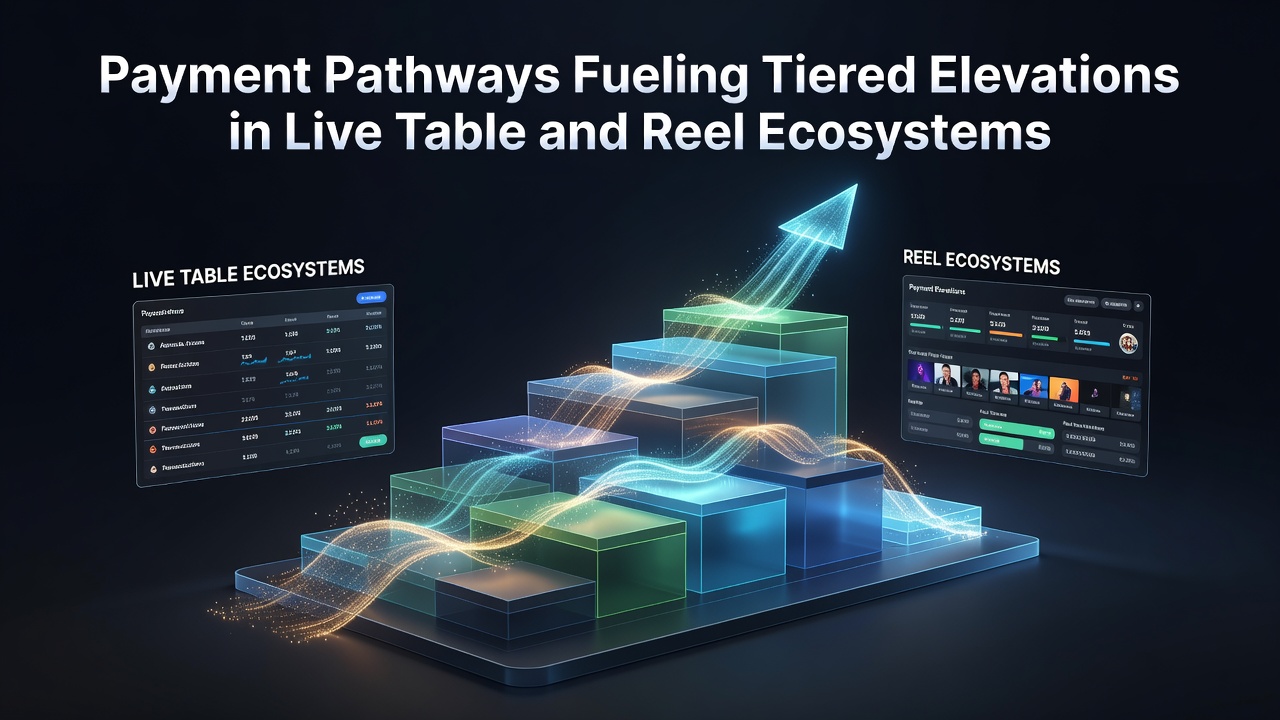
Payment Pathways Fueling Tiered Elevations in Live Table and Reel Ecosystems
Payment pathways in live table and reel ecosystems connect funding sources directly to membership structures that determine access levels, reward rates, and prize eligibility across mobile and desktop platforms, while data from industry reports shows steady growth in transaction volumes through 2026. These systems rely on verified deposit methods that trigger automated tier advancements, and observers note how seamless integrations between banking networks, digital wallets, and crypto options reduce processing times from days to minutes in many cases.
Core Mechanisms Linking Payments to Tier Progression
Transaction networks operate through sequenced verification steps that validate funds before crediting player accounts, and this process unlocks cumulative benefits tied to deposit frequency and volume thresholds. Research from academic studies on digital entertainment platforms indicates that players who route payments through instant-settlement channels reach higher tiers faster than those using traditional bank wires. And the pattern holds across both automated reel formats and real-time dealer environments because backend algorithms track activity in unified ledgers.
What's interesting is how e-wallet providers and blockchain rails feed into loyalty matrices that adjust reward multipliers automatically once a player crosses defined spending bands, whereas slower methods keep accounts in entry-level brackets longer. Figures from regulatory filings in multiple jurisdictions reveal that average tier advancement cycles shortened by measurable margins between 2024 and 2026 as instant payment adoption rose.
Live Table Environments and Funding Velocity
Live dealer tables demand rapid funding to maintain seat availability during peak hours, and payment pathways that clear within seconds allow players to move from basic access to premium tables without interruption. Those who've examined platform logs report that integrated instant-deposit tools correlate with higher retention in mid-tier and upper-tier brackets where table limits increase. But here's the thing: platforms must still comply with identity checks that run parallel to transaction flows, so even fast pathways include built-in pauses for compliance.

Evidence from operational data collected by gaming associations shows that live table participants using multi-currency wallets experience fewer session breaks compared with single-channel users, and this continuity supports steady accumulation toward elevated status levels. In July 2026 several major operators rolled out enhanced API connections to regional payment processors, further compressing the time between deposit confirmation and tier credit posting.
Reel Ecosystems and Cumulative Deposit Tracking
Slot and reel systems record every funded spin against tier criteria that scale bonus features and jackpot pool access, and pathways built on recurring automated transfers accelerate this tracking. Researchers who analyzed aggregated platform metrics discovered that accounts funded through loyalty-linked cards or prepaid instruments hit volume milestones at higher rates than sporadic manual deposits. The reality is that reel operators program these thresholds to reset on monthly cycles, which means consistent payment routing becomes the decisive factor for sustained elevation.
One study revealed that reel players who combined crypto rails with traditional cards maintained uninterrupted tier status across multiple calendar quarters, whereas single-method users often dropped back when processing delays occurred. And this dynamic appears consistently in datasets drawn from both North American and Asia-Pacific markets.
Regulatory Context and Cross-Border Flows
Authorities in various regions monitor payment pathways to ensure funds originate from licensed sources, and compliance layers now embed directly into tier engines so that verified transactions receive immediate credit toward status points. Data released by the Nevada Gaming Control Board and comparable bodies in other jurisdictions shows rising percentages of total handle moving through regulated digital channels. Observers note that these safeguards simultaneously protect platform integrity while enabling the tier systems that reward sustained activity.
Academic papers published through university gaming research centers highlight how API standardization across payment providers reduces friction for players operating in multiple markets, and this standardization supports the seamless elevation mechanics described earlier. Yet regulatory updates in mid-2026 introduced additional reporting requirements that platforms absorbed without lengthening player-facing processing times.
Conclusion
Payment pathways continue to serve as the operational backbone that converts deposits into tiered privileges across live table and reel environments, with evidence indicating ongoing refinements in speed and verification accuracy. Those monitoring industry metrics point to integrated funding solutions as the primary driver behind faster membership advancements recorded through the first half of 2026. The systems evolve alongside regulatory expectations while preserving the direct link between transaction velocity and access elevation.